
Opbouw
Hoe is de opleiding opgebouwd?Bij onze opleidingen voelt iedereen zich welkom en hoort iedereen erbij. Studenten en docenten kennen elkaar en weten elkaar te vinden. De docenten doen er alles aan om je te begeleiden bij je studie op een manier die bij jou past. Dit vraagt van jou betrokkenheid en een actieve inzet. Samen maken we het onderwijs.
Hierbij besteden we onder andere aandacht aan je:
- kennisbasis van het beroep
- handelen in de beroepspraktijk
- eigen professionele identiteit
- persoonlijke ontwikkeling
Al deze elementen komen steeds aan bod tijdens de opleiding. Studenten (en medewerkers) hebben invloed op de manier waarop dit gebeurt in medezeggenschapsraden.
Bij de start van je studie ligt de nadruk op het ontwikkelen van kennis en vaardigheden, maar direct komt ook de praktijk aan bod. Je leert reële beroepsvraagstukken aan te pakken, in samenwerking met medestudenten, docenten, professionals uit de praktijk en praktijkgerichte onderzoekers. Eerst krijg je veel begeleiding van je docent, later neem je steeds meer het heft in eigen handen. Tijdens je studie leer je jezelf steeds beter kennen en ontdek je wat jouw unieke kwaliteiten zijn als beroepsbeoefenaar.
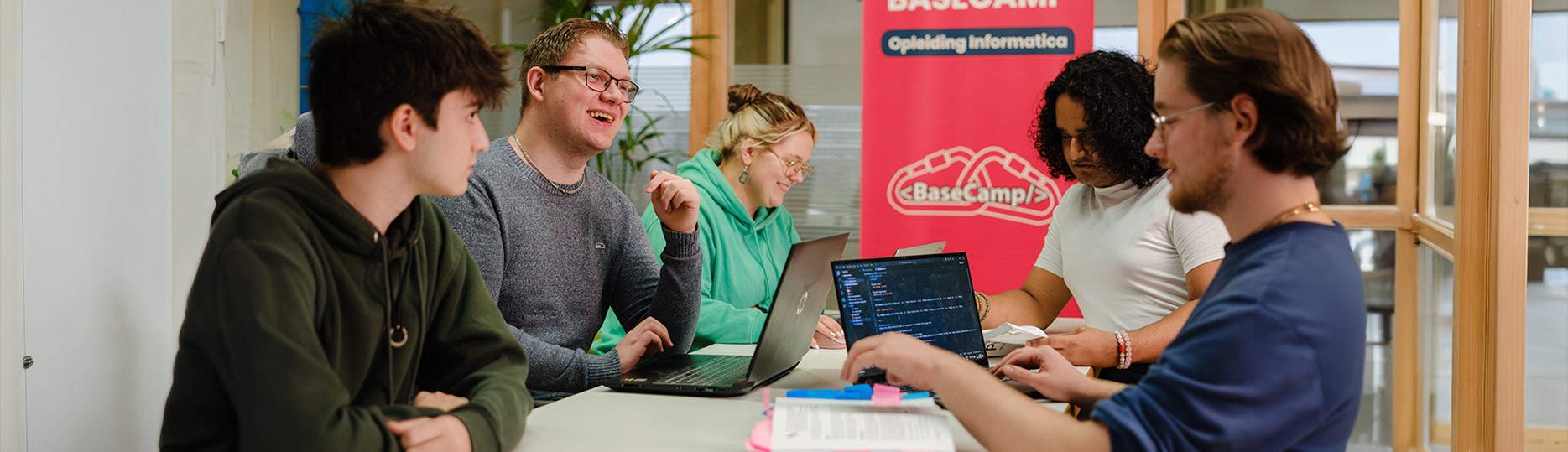
In het eerste jaar oriënteer je je op het informaticavakgebied en wordt de basis gelegd voor de rest van de studie. Je start het eerste semester met ‘BaseCamp’, een gestructureerd programma van 20 weken, waarbij je 4 dagen per week onder toeziend oog van twee vaste docenten werkt aan oefeningen en opdrachten volgens een vaste dagplanning. Je werkt 2 dagen op locatie en 2 dagen online.
Je leert zelfstandig de theorie en past die meteen toe in (programmeer)opdrachten. Hierbij word je ondersteund door je docenten en jouw leerteam; een groep medestudenten. Het semester sluit je af met een meesterproef, een programmeeropdracht waarmee je laat zien wat je geleerd hebt, en een mondeling assessment.
In het tweede semester van de opleiding Informatica ga je een stap verder in het programmeren. Je verdiept je in de concepten die je eerder hebt geleerd en maakt kennis met een nieuwe programmeertaal. Samen met een groep medestudenten pas je je kennis toe en werk je aan een praktijkgerichte applicatie. Hiermee leer je naast technische vaardigheden hoe je effectief samenwerkt in een team - een essentiële vaardigheid voor je toekomst als software developer.
Nadat je vooral hebt kennisgemaakt met het vakgebied, diep je in de hoofdfase deze kennis zowel theoretisch als praktisch, verder uit. Het tweede jaar kent innovatieve projecten, waarbij Rotterdamse bedrijven betrokken zijn.
In de projecten werk je in groepsverband aan praktijkgesimuleerde omstandigheden en pas je theorie toe. Hierbij werk je binnen toenemende complexiteit toe naar een werkend product en/of oplossing, door middel van gerichte projectontwikkelmethodieken. In het derde jaar ga je twintig weken op stage. In de tweede helft van het derde jaar en eerste helft van het vierde jaar volg je zelfgekozen minors, waarna je gaat afstuderen.
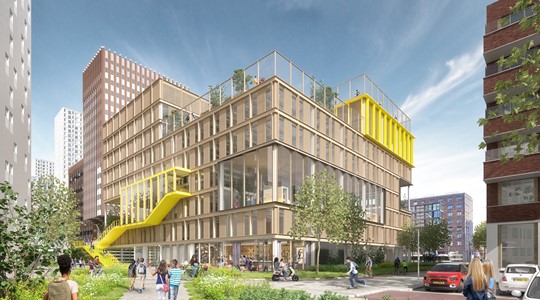
Studenten van de opleiding Informatica werken op Wijnhaven 99 in het Stadslab met allerlei nieuwe technologieën. Het Stadslab is de broedplaats om met de nieuwste technologieën aan de slag te gaan en te experimenteren: in het gebouw, maar ook in de stad.

Keuze
Tijdens je opleiding volg je een paar keuzevakken. Dit biedt je de kans om invulling te geven aan je specifieke leerbehoeften. Afhankelijk van je opleiding kun je zelf een stageplek uitzoeken. Via een minor in de hoofdfase van je studie kies je een bepaald profiel waarmee je jezelf kunt onderscheiden. Ook de afstudeeropdracht die je kiest, geeft een persoonlijke inkleuring aan je opleiding.
Begeleiding
Iedere student is uniek en heeft zijn eigen ideeën over wat hij in zijn studie wil bereiken. In onze begeleiding maken we je bewust van je capaciteiten, kansen en uitdagingen. Soms blijkt tijdens of al vóór de opleiding dat je moeite hebt met een bepaald vak. Dan is het nuttig je kennis hiervan bij te spijkeren. Als student krijg je een coach (docent) die je begeleidt en de studievoortgang in de gaten houdt. Ook kun je een peercoach krijgen: een ouderejaarsstudent die een jongerejaars begeleidt.
Studeren met een functiebeperking
Heb je een functiebeperking en heb je daarvoor aanpassingen of voorzieningen nodig, dan bieden we daarvoor verschillende mogelijkheden.
Je krijgt de gelegenheid werkervaring op te doen tijdens een stage in het derde jaar. Vijf maanden werk je bij een bedrijf om in praktijk te brengen wat je tot nu toe hebt geleerd.
In de laatste fase van je opleiding verdiep je je door middel van twee minors in je vakgebied of verbreed je je kennis in een door jou gewenste richting. Je kunt kiezen uit veel minors. Voor de opleiding Informatica geldt dat je in het derde en vierde jaar een keuze maakt uit verschillende minors, die aansluiting bieden aan verschillende specialisaties binnen het vakgebied. Voorbeelden hiervan zijn Security Lab, Data Science, Software Engineering, Information Management en Security.
Beveiliging wordt steeds belangrijker in een wereld waarin alles met elkaar verbonden is. Daarom zijn er nieuwe regels vanuit de Europese Unie, zoals NIS2 en de AVG, die zorgen voor betere bescherming van data en systemen.
In deze minor leer je hoe je apps en slimme apparaten veilig maakt en test. Denk aan slimme auto’s, medische apparaten en andere belangrijke systemen. Je leert denken als een ethische hacker: je ontdekt zwakke plekken en leert hoe je die oplost.
Ook leer je hoe je vanaf het begin rekening houdt met veiligheid (security-by-design) en hoe je veilige software ontwikkelt. Je kijkt naar systemen vanuit verschillende kanten, zodat je een compleet beeld krijgt van de beveiliging.
Zo ontwikkel je skills waarmee je systemen veiliger kunt maken en beter kunt beschermen tegen aanvallen.
De hoeveelheid data bij bedrijven en overheden groeit explosiever dan ooit. Deze datastroom biedt enorme kansen voor vernieuwende toepassingen en slimme oplossingen. Maar om die kansen écht te benutten, zijn professionals nodig die weten hoe je data verzamelt, beheert en inzet voor impactvolle innovaties.
De Data Science minor helpt je om data te analyseren en datagedreven beslissingen te nemen. Je onderzoekt actuele uitdagingen, bestudeert veelbelovende oplossingsrichtingen en bouwt prototypes om ideeën direct in de praktijk te testen.
Innovatie en onderzoek vormen de kern van deze minor: je leert niet alleen ‘wat’ werkt, maar vooral ‘waarom’.
Daarnaast krijg je inzicht in databeheer en privacyvraagstukken. Door de combinatie van theorie en praktijk word je goed voorbereid op de arbeidsmarkt en ontwikkel je vaardigheden die je helpen om echte problemen op te lossen.
In deze minor leer je de basis van programmeren met Python. Daarna ga je Python gebruiken om data te bewerken en te analyseren. Je ontwikkelt belangrijke skills in programmeren en data-analyse. Python is een populaire en krachtige programmeertaal die in veel vakgebieden wordt gebruikt, vooral in data science. De taal is makkelijk te lezen en daardoor ook geschikt als je nog geen programmeerervaring hebt. Je leert hoe je data kunt onderzoeken, opschonen, visualiseren en analyseren. Ook ontdek je hoe je met deze skills betere, datagedreven keuzes kunt maken. Door te oefenen met opdrachten krijg je steeds meer vertrouwen. Uiteindelijk kun je zelf Python-programma’s schrijven en data-analyse toepassen in jouw eigen studie of werkveld.
In deze minor leer je hoe je een app bouwt met Flutter en Dart. Deze app werkt op zowel je telefoon als je computer. Je gebruikt echte data, zoals aardbevingen, gaswaarden en temperatuur, om je app te vullen. Je leert niet alleen programmeren, maar ook hoe je een goede en gebruiksvriendelijke app ontwerpt. Denk aan het opzetten van je code, testen en het maken van slimme keuzes tijdens het bouwen. Je werkt met kennis uit verschillende vakgebieden, zoals IT, design en psychologie. Zo leer je hoe je apps maakt die duidelijk en fijn zijn om te gebruiken. De minor begint met de basis en werkt stap voor stap toe naar een werkend prototype. Omdat Flutter veel wordt gebruikt in de praktijk, kun je deze skills later goed gebruiken in je carrière.
Student van andere hogeschool?
Ben je student bij een andere hogeschool en wil je een minor bij Hogeschool Rotterdam volgen? Bekijk je mogelijkheden op Kiesopmaat.nl. De minors van Hogeschool Rotterdam duren een half jaar (september - februari) en leveren 30 EC (studiepunten) op.
Opleidingsoverstijgend programma - ‘Een slimme en sociale stad: maak ’t samen’
Wil jij het verschil maken op thema’s zoals: duurzaamheid, zorg, inclusie en digitalisering? Dan kun je in het derde jaar kiezen voor ons opleidingsoverstijgend programma: ‘Een slimme en sociale stad: maak ’t samen’
Wat ga je doen tijdens het programma?
Tijdens het opleidingsoverstijgende programma ga je samen met studenten van andere opleidingen aan de slag met een actueel maatschappelijk vraagstuk. Door gebruik te maken van elkaars kennis, talenten en perspectieven kan je tot andere, completere ideeën en oplossingen komen. Je leert van en met elkaar en weet veel beter wat realistische en haalbare oplossingen zijn. Je draagt vanuit jouw eigen expertise bij aan een toekomstbestendige samenleving én aan jouw eigen toekomst.
Steeds meer organisaties zijn opzoek naar professionals die vanuit verschillende perspectieven naar een vraagstuk kan kijken, iemand die gemakkelijk kan schakelen en die de taal van andere disciplines spreekt om tot de meest betekenisvolle ideeën te komen.
Hoe ziet het programma eruit?
Tijdens het programma ‘Een slimme en sociale stad: maak ’t samen’ werk je in een team aan een opdracht die in het teken staan van verantwoorde digitale innovatie: hoe kan digitale technologie op een verantwoorde manier bijdragen aan het verbeteren van de sociale leefkwaliteit van mensen?
In 20 weken werk je toe naar het opleveren van een concreet eindproduct, waarbij iedere student vanuit zijn of haar opleiding medeverantwoordelijk is voor het eindresultaat. Je doet dit onder begeleiding van een docent die jou wekelijks ziet en begeleidt in dit leerzame proces.
Ook vinden er wekelijks workshops, verbredende en verdiepende (inspiratie)colleges of gastlessen plaats die het team voorzien van de benodigde kennis, vaardigheden en mindset om tot een betekenisvol eindproduct te komen.
Wil je meer weten? Stuur ons dan een e-mail via slimmesocialestad@hr.nl
Vaak kom je er tijdens je afstudeerstage in het vierde jaar achter wat je na je studie wil doen. Als zelfstandig consultant of toch liever op de IT-afdeling van een multinational?
Dit filmpje geeft een korte impressie van de (afstudeer) projecten waar informatica studenten aan hebben gewerkt.
Als je een internationale carrière ambieert, dan bereidt de opleiding je hier ook op voor! In overleg met de opleiding kun je een deel van de opleiding in het buitenland doorbrengen, bijvoorbeeld tijdens je stageperiode.
Vakken
Een indicatie van de vakken die je kunt verwachten
Semester 1
-
Basecamp
Basecamp
Studenten leren in 20 weken de basis van programmeren in Python en ontwikkelen studie- en samenwerkingsvaardigheden. Ze werken zelfstandig en in teams en sluiten af met een programmeerproject en mondelinge toets.
-
Keuzeonderwijs
Keuzeonderwijs
Binnen deze cursus kies je zelf wat je wilt leren om je opleiding nog meer toe te spitsen op je eigen interesses en je blikveld als (informatica)professional te verruimen. Hierdoor leer je jezelf ontwikkelen om een goede bijdrage te kunnen leveren aan het werkveld.
Semester 2
-
Object oriented design and programming
Object oriented design and programming
Studenten leren programmeren in C# en de principes van objectgeoriënteerd werken. Ze oefenen met Scrum en teamwork, bouwen een consoleapplicatie en sluiten af met een tentamen en presentatie
-
Keuzeonderwijs
Keuzeonderwijs
Binnen deze cursus kies je zelf wat je wilt leren om je opleiding nog meer toe te spitsen op je eigen interesses en je blikveld als (informatica)professional te verruimen. Hierdoor leer je jezelf ontwikkelen om een goede bijdrage te kunnen leveren aan het werkveld.
Semester 3
-
Web App. Development
Web App. Development
Studenten leren moderne webapplicaties bouwen met React, TypeScript en ASP.NET Core. Ze werken in teams aan een praktijkopdracht en ontwikkelen vaardigheden in front-end, back-end en dataverwerking
-
Software Construction: Process and Tools
Software Construction: Process and Tools
Studenten verbeteren bestaande software met DevOps-methodes. Ze leren werken met Git, CI/CD en Scrum om processen te automatiseren, software te testen en kwaliteit te verhogen.
.
-
Skills semester 3
Skills semester 3
Studenten ontwikkelen communicatievaardigheden, leren omgaan met ethische vraagstukken en passen design thinking toe. Ook leren zij hoe ze een goed gestructureerd onderzoeksrapport schrijven.
-
Studieloopbaancoaching semester 3
Studieloopbaancoaching semester 3
Binnen SLC werk je onder andere aan: het voorbereiden op je stage, het maken en bijhouden van een professioneel LinkedIn-profiel, en nadenken over wie je bent, wat je kunt en wat je wilt. Daarnaast leer je hoe je moet solliciteren, zoals het schrijven van een goede motivatiebrief en cv en hoe je een sollicitatiegesprek aanpakt.
Semester 4
-
Data Structures and Algorithmes
Data Structures and Algorithmes
Studenten leren hoe datastructuren en algoritmen software efficiënter maken. Ze ontwerpen en programmeren oplossingen in C# en passen deze toe in praktijkopdrachten.
-
Data Technologies
Data Technologies
Studenten leren verschillende databases kennen (zoals SQL en NoSQL) en passen deze toe in projecten. Ze adviseren welke oplossing het beste past en implementeren deze in een softwarecase.
-
Skills Semester 4
Skills Semester 4
Studenten ontwikkelen communicatievaardigheden, leren omgaan met ethische vraagstukken en passen design thinking toe. Ook leren zij hoe ze een goed gestructureerd onderzoeksrapport schrijven.
-
Studieloopbaancoaching semester 4
Studieloopbaancoaching semester 4
Binnen SLC werk je onder andere aan: het voorbereiden op je stage, het maken en bijhouden van een professioneel LinkedIn-profiel, en nadenken over wie je bent, wat je kunt en wat je wilt. Daarnaast leer je hoe je moet solliciteren, zoals het schrijven van een goede motivatiebrief en cv en hoe je een sollicitatiegesprek aanpakt.
-
Keuzeonderwijs
Keuzeonderwijs
Binnen deze cursus kies je zelf wat je wilt leren om je opleiding nog meer toe te spitsen op je eigen interesses en je blikveld als (informatica)professional te verruimen. Hierdoor leer je jezelf ontwikkelen om een goede bijdrage te kunnen leveren aan het werkveld.
- Introduction to AI
Semester 5
-
Stage
Stage
Het doel van de stage is dat je praktijkervaring opdoet die goed aansluit bij wat je al hebt geleerd. Tijdens je stage ontdek je waar jouw interesses liggen binnen het vakgebied: waar je goed in bent, wat je minder leuk vindt en wat je nog verder wilt ontwikkelen. Ook bouw je meteen aan je professionele netwerk, wat later goed van pas kan komen.
In de afgelopen twee jaar heb je al gewerkt aan belangrijke skills binnen de opleiding Software Engineering/IT. Tijdens je stage ga je hier verder mee aan de slag, zoals: managen & sturen, analyseren, adviseren, ontwerpen, realiseren en je professionele vaardigheden.
Aan het einde van je stage wordt verwacht dat je deze skills beheerst op het niveau van het derde jaar. -
Studieloopbaancoaching semester 5
Studieloopbaancoaching semester 5
Binnen SLC werk je onder andere aan: het voorbereiden op je stage, het maken en bijhouden van een professioneel LinkedIn-profiel, en nadenken over wie je bent, wat je kunt en wat je wilt. Daarnaast leer je hoe je moet solliciteren, zoals het schrijven van een goede motivatiebrief en cv en hoe je een sollicitatiegesprek aanpakt.
Semester 6
-
Studieloopbaancoaching semester 6
Studieloopbaancoaching semester 6
Binnen SLC werk je onder andere aan: het voorbereiden op je stage, het maken en bijhouden van een professioneel LinkedIn-profiel, en nadenken over wie je bent, wat je kunt en wat je wilt. Daarnaast leer je hoe je moet solliciteren, zoals het schrijven van een goede motivatiebrief en cv en hoe je een sollicitatiegesprek aanpakt.
- Route A: Explorative Software Development
- Route B: Multidisciplinair Project
Semester 7
-
Minor
Minor
De minor is een onderdeel in je vierde jaar waarin je je kunt verdiepen in iets wat jij interessant vindt. Je kiest uit een breed aanbod van minors, zowel binnen CMI als bij andere hogescholen of zelfs in het buitenland.
Binnen INFormatica kun je bijvoorbeeld denken aan Cross-Platform Software Development for Nature, Large Language Models Engineering of Data Science. Daarnaast zijn er ook andere richtingen mogelijk, zoals Artificial Intelligence, Security, Cloud Engineering of Game Development. -
Studieloopbaancoaching semester 7
Studieloopbaancoaching semester 7
Bij Studieloopbaancoaching word je begeleid tijdens de persoonlijke ontwikkeling die je doormaakt en daarnaast stimuleren we de zelfredzaamheid als het gaat om het maken keuzes ten aanzien van je (studie)loopbaan.
Semester 8
-
Graduation Project
Graduation Project
The last part of the program is the Graduation Project, where students work on an assignment provided by a company. In this phase, they demonstrate that they have mastered the required competencies in a realistic professional environment. At the company where they wish to graduate, students agree on a graduation project that fits both their interests and the program’s requirements. They are supervised by a company supervisor and a school supervisor, but for the most part they work independently.
Keywords
Graduation Project; Bachelor Degree Project; Software Engineer; Final Project; Internship; Semester 8; All Competencies; End Level; Graduation Folder. -
Studieloopbaancoaching semester 8
Studieloopbaancoaching semester 8
Binnen SLC werk je onder andere aan: het voorbereiden op je stage, het maken en bijhouden van een professioneel LinkedIn-profiel, en nadenken over wie je bent, wat je kunt en wat je wilt. Daarnaast leer je hoe je moet solliciteren, zoals het schrijven van een goede motivatiebrief en cv en hoe je een sollicitatiegesprek aanpakt.
Heb het lef om ambitieus te zijn!
Voor proactieve, nieuwsgierige, creatieve studenten is er het Honoursprogramma. De kans om tijdens je studie samen met gemotiveerde studenten te werken aan uitdagende opdrachten en jezelf te onderscheiden.
Onderwijsvorm
Hoe is het onderwijs ingericht?

Na je studie
Wat kun je doen na de opleiding?Gefeliciteerd! Je hebt je Bachelor of Science (BSc) gehaald. Deze titel mag je achter je naam voeren. Je kunt er ook voor kiezen om de titel Ingenieur (ing.) vóór je naam te zetten.
Ook ontvang je bij je diploma een diplomasupplement met een DS-label. Met dit Engelstalige document kun je de waarde van je diploma eenvoudiger aantonen in het buitenland bij de toelating tot een vervolgstudie of bij het vinden van een baan.
Heb je het Honoursprogramma gevolgd? Dan krijg je ook een honours degree, waarmee je je doorzettingsvermogen en extra kennis kunt aantonen.
Met een opleiding Informatica kun je aan de slag in de IT-branche of in een branche waar intensief gebruik wordt gemaakt van software. Beroepen die passen bij de opleiding zijn bijvoorbeeld: software engineer, webprogrammeur, systeemontwerper of IT-projectleider.
De software engineer ontwikkelt software en past hierbij principes en technieken uit computer science en engineering toe bij het ontwerpen, bouwen en testen van software. Soms stelt de software engineer ook de programmaspecificaties en de applicatiestructuur op in samenwerking met een technisch ontwerper. De software engineer voert daarnaast programmatesten uit en onderhoudt en optimaliseert de prestatiekenmerken van software.
De data engineer organiseert data voor analytische doeleinden. Denk hierbij aan data afkomstig van verschillende bronnen zoals social media of e-mails. Aan de data engineer is het de taak om deze vaak ongestructureerde data voor bedrijven te organiseren en gebruiksklaar te maken voor analyse. Verdere taken binnen de functie zijn het ontwerpen, bouwen, beveiligen en het analyseren van de data en de daarbij behorende algoritmes en modellen. Ook komt het voor dat zij binnen bedrijven worden ingezet voor het integreren van nieuwe datamanagementtechnologieën en software engineering tools in al bestaande systemen.
Als systeemanalist ben je verantwoordelijk voor het analyseren van een systeem. Vervolgens kom je met een voorstel voor een ontwerp. Je schrijft verbetervoorstellen voor aanpassingen aan systemen en bereidt deze ook voor. Jij begeleidt processen, ICT projecten en hardware. Ook leg je dit vast in documenten.
Een webprogrammeur is iemand die de technische kant van complexe websites verzorgt. De webprogrammeur ontwikkelt het back-end en zorgt voor de koppeling tussen het back-end en het front-end. Een webprogrammeur is dus voornamelijk met de technische kant van de website bezig.
Als cloud engineer ben je verantwoordelijk voor het ontwerpen, ontwikkelen en beheren van cloudoplossingen. Dit betekent dat je werkt met platforms zoals Amazon Web Services (AWS), Google Cloud en Microsoft Azure om systemen in de cloud te creëren en te onderhouden. Cloud engineers zorgen ervoor dat bedrijven veilig en efficiënt gebruik kunnen maken van cloudtechnologieën. Ze helpen bij het verplaatsen van applicaties naar de cloud, optimaliseren cloudomgevingen en waarborgen de beveiliging van gegevens. Daarnaast speel je een belangrijke rol in het implementeren en beheren van Continuous Integration en Continuous Deployment (CI/CD)-processen, waarmee je de softwareontwikkeling en -levering automatiseert en versnelt.
Huidige arbeidsmarkt
Bron: landelijke cijfers Researchcentrum voor Onderwijs en Arbeidsmarkt (ROA), mei 2026-
Gemiddeld bruto maandloon 1,5 jaar na afstuderen€ 3455
-
Vaste baan 1,5 jaar na afstuderen76%
-
Voltijdbaan 1,5 jaar na afstuderen87%
-
Spreekt van goede aansluiting arbeidsmarkt73%
-
Zou achteraf zelfde opleiding kiezen86%
Praktische informatie
De belangrijke informatie op een rijVeelgestelde vragen
Nee, je hoeft geen bepaalde skills te hebben om te kunnen starten met de opleiding Informatica. We starten vanaf de basis met programmeren, zodat iedereen kan instromen.
Handig is het wel als je:
- een beetje handig bent met computers
- het leuk vindt om dingen uit te zoeken
- nieuwsgierig bent naar hoe technologie werkt
Heb je al wél ervaring? Dan krijg je extra uitdaging. En er zijn peercoaches (ouderejaars) die je kunnen helpen als je extra uitleg nodig hebt.
Het programma van de opleiding Informatica is bewust ontworpen voor studenten met uiteenlopende achtergronden en niveaus. Heb je al veel kennis, dan dagen we je uit met verdiepende opdrachten en projecten. Begin je juist met weinig voorkennis, dan zorgen we voor extra begeleiding, zodat je snel kunt aansluiten.
Tijdens de opleiding krijg je een mix van theorie, praktijk en projecten. Elke cursus bestaat uit:
- Theorielessen: je leert de benodigde vakinhoud en concepten.
- Praktische opdrachten: je past de theorie meteen toe in kleine oefeningen.
- Projecten: je werkt samen met andere studenten aan realistische opdrachten.
Hoeveel tijd je eraan kwijt bent, verschilt per vak en per leerjaar.
In het eerste semester begin je met BaseCamp: een intensieve startperiode waarin je veel op school bent om goed voorbereid te worden op het hbo. Denk aan samenwerken, plannen, studeren en de basis van programmeren.
Na de opleiding Informatica kun je de techwereld in als bijvoorbeeld:
- Software engineer
- Cybersecurity specialist
- Data scientist
- AI engineer
Je kiest later in de opleiding zelf in welke richting jij je wilt verdiepen. Bekijk meer over de beroepen onder het kopje Na je studie - Beroepsbeeld.
We hebben geen selectie en geen numerus fixus. Wel doen we een Studiekeuzecheck-gesprek. Dat is bedoeld om te kijken of de opleiding bij je past.
Alle informatie over de actuele toelatingsvoorwaarden van de opleiding vind je op de pagina Toelatingsvoorwaarden.
Binnen de opleiding zijn er verschillende mogelijkheden om internationale ervaring op te doen:
- Je kunt een stage of afstudeerproject in het buitenland doen.
- Studeren in het buitenland (dus een heel semester) kan niet binnen deze opleiding.
Tijdens je studie krijg je meer info over internationale mogelijkheden en partnerinstellingen.
Als je straks begint aan de opleiding Informatica, helpen deze tips je om met vertrouwen en plezier van start te gaan:
- Blijf nieuwsgierig. Informatica draait om begrijpen hoe dingen werken.
- Maak fouten. Bugs horen erbij — zo leer je juist het snelst.
- Begin meteen met bouwen. Kleine apps, scripts of websites helpen je de theorie te snappen.
- Experimenteer buiten de lessen. Probeer nieuwe tools, frameworks of ideeën uit.
- Werk goed samen. Informatica is teamwork — leer van elkaar en breng energie in projecten.
Aanmelden voor de opleiding
Wil je in september starten met je opleiding? Meld je dan uiterlijk 31 juli aan. Aanmelden loopt via Studielink. Na aanmelding nodigt de opleiding je uit voor een studiekeuzecheck.
Je aanmelden voor deze studie gaat gemakkelijk in drie stappen:
- Om je aan te melden, moet je beschikken over een DigiD. Heb je nog geen DigiD? Vraag deze dan nu aan. De aanvraag van DigiD duurt ongeveer een week.
- Meld je aan via Studielink.
- Om je toelating af te ronden, moet je uiterlijk 31 augustus aan alle toelatingsvoorwaarden voldoen, inclusief de betalingsverplichting van het collegegeld.